What animals say
When I was communicating with one dog, I felt strongly that I had a sore throat and couldn’t swallow. To check if it was from him or me I stopped and the sensation went, then started again and it returned. So I knew it was him. Apparently he’d had an operation involving a general anaesthetic, a couple of days beforehand, during which he had a tube down his throat. That explained it!
“dots all over the walls”
I usually ask them to tell me something that would prove to the owner that I was speaking with them. One said that there were “dots all over the walls”. I double-checked, and that was what he said. What? !! The human companion laughed like a drain and said she had circular Post-it notes all over her walls with inspirational sayings written on them!
Overview
Animals communicate with us all the time, of course. Perhaps your dog will look at you and then at the door, or bark, if he wants to go out. He might paw an empty water bowl that he wants you to fill or nag to go for a walk.
Dogs and cats often can tell the time with remarkable accuracy. If it is their usual dinner time you will know about it. They even wake from a deep sleep to remind us!
Garden chickens make different noises according to what is going on for them, with quite a clatter if their food or water is getting low or they want to come out of the coop in the morning!
Sometimes we feel we want to understand more. This is when employing the services of someone trained as an animal communicator, like myself, might be beneficial.
Information about animal body language is available online and in books. Each species has its way of communicating, so it is essential to understand that. Often, people give human attributes to their animals, which is usually inappropriate.
*Always get your Vet involved if you have any serious concerns about your animal; this is not to be used for medical conditions or to delay treatment from your vet. Please DO NOT use my suggestions as a substitute for veterinary care.
What an animal communicator does
Talking with an animal requires practice and skill, so a training course is advisable. I attended Animal Communication and EFT training run by the late Catherine O’Driscoll. I quickly realised I could already do it (my shamanic skills easily extended out to communicate with an animal).
Animal communicators discover an animal’s perspective on life (not medical conditions – for those, you need to visit a veterinarian).
I prefer to work at a distance rather than with the animal in the room. This allows me to concentrate on communication without distraction. With a photograph to work from and some questions that the owner would like answered I can see what I can achieve. Connection with the animal is a conversation and it goes where it goes.
I write down all my questions, answers, and any additional information that comes to me during the communication session, and I do minimal interpretation/filtering. I often do not know the owner or the animal personally. (I often get images, feelings or sounds as additional information.)
I step into the world of the owner and the animal, which is different from my own. The human companion will be more able to relate to it to understand how to improve the animal’s situation.
Different voices!
It was a delightful surprise for me to realise that each animal ‘speaks’ differently. They use words in different ways, just like us! What fun!
One animal will be very chatty. Another will use a more measured pace of speech. Some have said “fine” often, and others “OK”. They frame what they say based on how they see life.
Typical uses for animal communication:
- Checking the relationship between the animal and others
- Finding out if anything is making the animal unhappy (or happy)
- Getting the animal’s perspective on something
In the animal communication session, I can also:
- Use EFT or shamanic healing remotely to ease something for the animal
- Dowse to check something, e.g. the animal’s dietary preferences.
More information about the tools & techniques mentioned
Dowsing

Dowsing with a pendulum is something I find helpful in narrowing down options. With practice, it is possible to get more than a yes/no answer – perhaps a percentage – to give a comparison between various options. I often use dowsing to compare different options (and, in my life, even to locate missing items).
Emotional Freedom Technique (EFT)
Energy tapping involves tapping on specific meridian points to effect energetic change. This can also be done for another person or animal remotely. It can be handy for calming and has sometimes been reported to ease physical ailments.
Shamanic Healing
I use my shamanic skills to connect to the animal for the communication work and then take it from there. Rarely is shamanic healing itself required, but I never rule it out.
Kinesiology (Muscle Testing)
For completeness, I will mention kinesiology/muscle testing, as it can be used to gain a deeper understanding of your animal. It works similarly to dowsing, so I tend to use it these days. In brief, you ask your body (or the animal’s body if he/she is present) to respond in one way for ‘yes’ and another for ‘no’. Then, you run through your questions. It takes a little practice, so, as for dowsing, use it to choose between fairly black-and-white options initially. For example, you can ask yes/no questions about the animal’s happiness, living conditions, feelings, and wants.
Separate service: e-Lybra9 bio-resonance
There is a wealth of information on my website about this topic. For animals, I am unable to diagnose or treat them. A general holistic balancing session, using a hair sample and some basic information about the animal, can broadly support the animal, making it worth considering.
My dogs have e-Pendants on their collars. I am not a vet, so I also see the local vet and consult a homeopathic vet. When the dogs get older, other therapies, such as canine massage and acupuncture, are used. My cats and chickens also receive bio-resonance sessions.

What my clients say
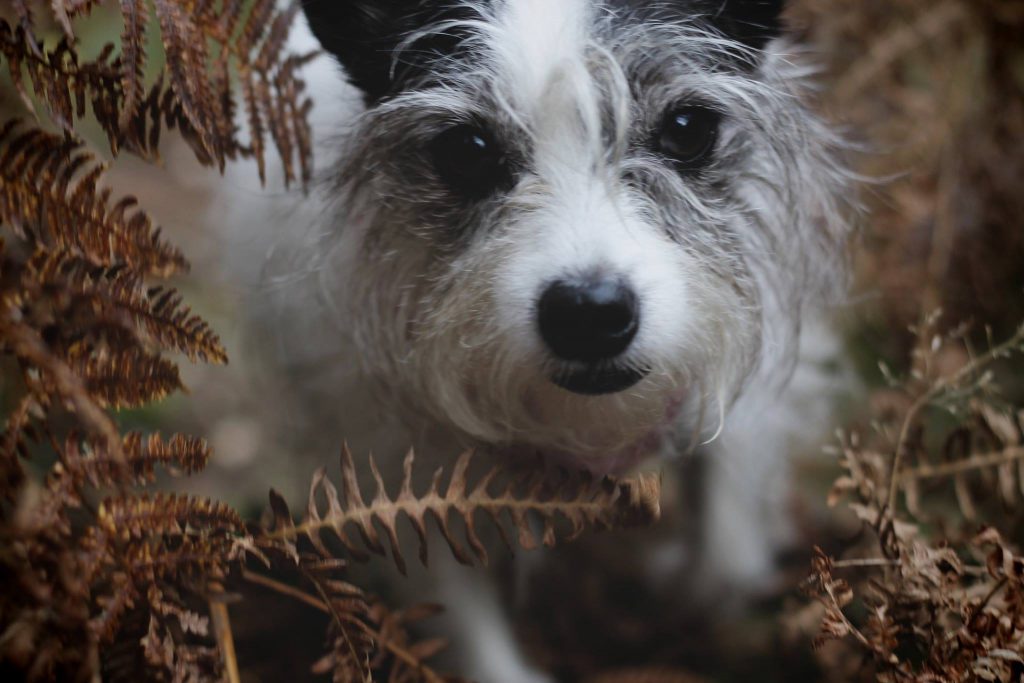
“I met Carol Fieldhouse at a networking meeting. She does not know anything about me or my dog, but she somehow managed to produce a startlingly accurate ‘communication’ from Kiki – all from a photo sent by e-mail. It has been very reassuring to feel that Kiki has let us know what works and doesn’t work for her; and we have made one or two small changes based on the narrative. Carol really did capture Kiki’s personality and came up with some evidence that would have been very hard to guess, so we are convinced that she has a rare and special gift.”This is Kiki

Information
Catherine O’Driscoll, the late founder of Canine Health Concern said that “Animals are good-hearted souls. They don’t judge, criticise or condemn.” She wrote some great books, one is a most interesting and useful personal development book for humans called “The Animal’s Agenda“ with help from her animals.
I was pleased to see an article in the Horse and Hound in August 2020 saying how using an animal communicator had allowed a top showjumping horse to perform well again. A conversation performed remotely with the horse had allowed the horse to understand more, and when the article had been written, it had jumped clear rounds ever since!